
Why HD Video & Digital Stills Matter for Today’s ROV Inspections
And How to Achieve It Without Replacing Your Vehicle

Inspection Expectations Have Changed
Subsea inspections have evolved significantly over the past decade. Whether surveying offshore energy assets, underwater infrastructure, marine habitats, or scientific research sites, operators are expected to deliver more than simply recorded video.
Today's clients expect imagery that supports confident decision-making. Engineers need to zoom into corrosion and welds without losing detail. Researchers require imagery suitable for quantitative analysis. Inspection reports increasingly rely on clear visual evidence, while emerging AI-assisted workflows demand clean, high-quality datasets.
Unfortunately, many ROV systems currently in service were designed before these requirements became standard. Although these vehicles continue to perform reliably underwater, their imaging systems often limit the quality of the information operators can collect.
The challenge isn't that the ROV no longer works, it's that inspection expectations have outgrown the vehicle's original video infrastructure.
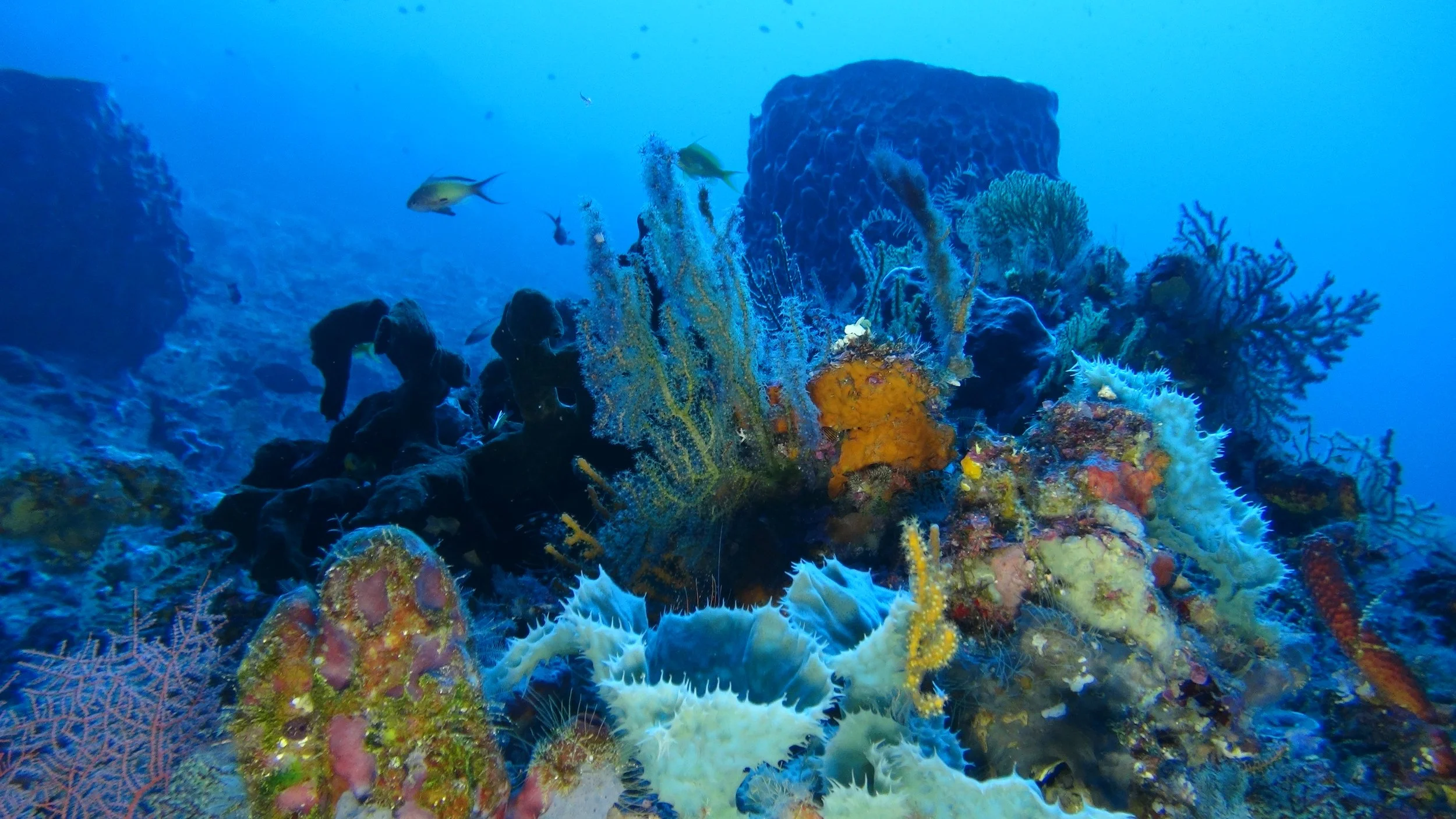
Photo captured during Nekton First Desent: Comoros mission using a SubC Imaging Rayfin camera
Better Imaging Leads to Better Decisions
Improving image quality isn't simply about capturing sharper videos or stills. Higher-resolution digital imaging provides practical operational benefits throughout an inspection workflow, including:
Detecting smaller defects before they become costly failures
Capturing clearer evidence for inspection reports
Giving inspectors confidence when reviewing imagery remotely
Creating datasets suitable for AI analysis and automated feature detection
Reducing uncertainty that can lead to repeat inspections
Future-proofing inspection data for evolving customer requirements
When operators can see more detail, they can make better decisions with greater confidence. And for many inspection programs, that translates directly into improved efficiency and better project outcomes.
Why Many Existing ROVs Can't Deliver HD, 4K or Digital Stills
Many compact and work-class ROVs still operate using analog video systems and copper-based communications such as coaxial or twisted-pair conductors. These vehicles remain dependable workhorses and continue to perform exceptionally well in demanding environments. However, their communication architecture was never designed to transport modern digital imaging data.
Historically, achieving HD or 4K video meant replacing large portions of the vehicle, including:
Fiber-optic tether systems
Vehicle electronics
Topside communication hardware
Or, in some cases, purchasing an entirely new ROV.
For operators with proven fleets, these upgrades can be difficult to justify when the vehicle itself is still meeting operational requirements.
Bringing Modern Imaging to Existing ROV Systems
Instead of replacing a capable ROV simply to improve image quality, operators increasingly want a way to modernize the imaging system while keeping the rest of the vehicle in service.
We developed the Rayfin Uplink specifically to solve this challenge. This system transmits HD & 4K digital video, high-resolution still images, and full camera control through the existing coaxial or twisted-pair conductors already found in many legacy ROV systems.
No fiber-optic tether is required.
At the surface, SubC’s DVR+ receives the incoming signal, giving operators live video, recording capabilities, camera control, and digital data management through a familiar interface. The result is a practical way to introduce modern digital imaging without redesigning an otherwise reliable vehicle.
Real Benefits in the Field
The value of improved imaging extends beyond better-looking video. With higher-quality imagery, inspection teams can produce more detailed reports, review assets with greater confidence, and deliver datasets that meet today's increasing customer expectations.
For companies operating legacy fleets, this can also extend the use-life of existing equipment while improving the quality of inspection deliverables. Vriezoo ROV Services experienced this firsthand while upgrading one of its compact inspection systems.
"With small, non-fiber ROVs, getting 4K video to the surface just wasn't possible. The Rayfin Uplink finally changed that."
By integrating the Rayfin Uplink into their existing workflow, Vriezoo introduced modern digital imaging capabilities without replacing the vehicles they already relied on.
Supporting Modern Inspection Workflows
High-quality imagery becomes even more valuable when paired with digital inspection workflows. Combined with SubC Imaging's DVR+, operators can:
Record synchronized HD & 4K inspection footage
Capture high-resolution still images
Manage inspection data digitally
Integrate imagery into reporting workflows
Prepare datasets for future AI-assisted analysis
Rather than simply recording video, operators create inspection data that is easier to review, share, archive, and analyze long after the dive is complete.
Ready to Modernize Your Fleet?
Many ROVs currently operating offshore remain mechanically sound and operationally reliable. The challenge is no longer the vehicle, it's the quality of the data customers increasingly expect.
If your inspection program is running on legacy cabling but needs modern imaging results, the Rayfin Uplink can get you there without a fleet overhaul.
